Bullet Proof Hiace Bus Rental In Lagos
A chauffeur-driven armoured Toyota Hiace for small VIP groups, executive teams and security-conscious movements across Lagos.
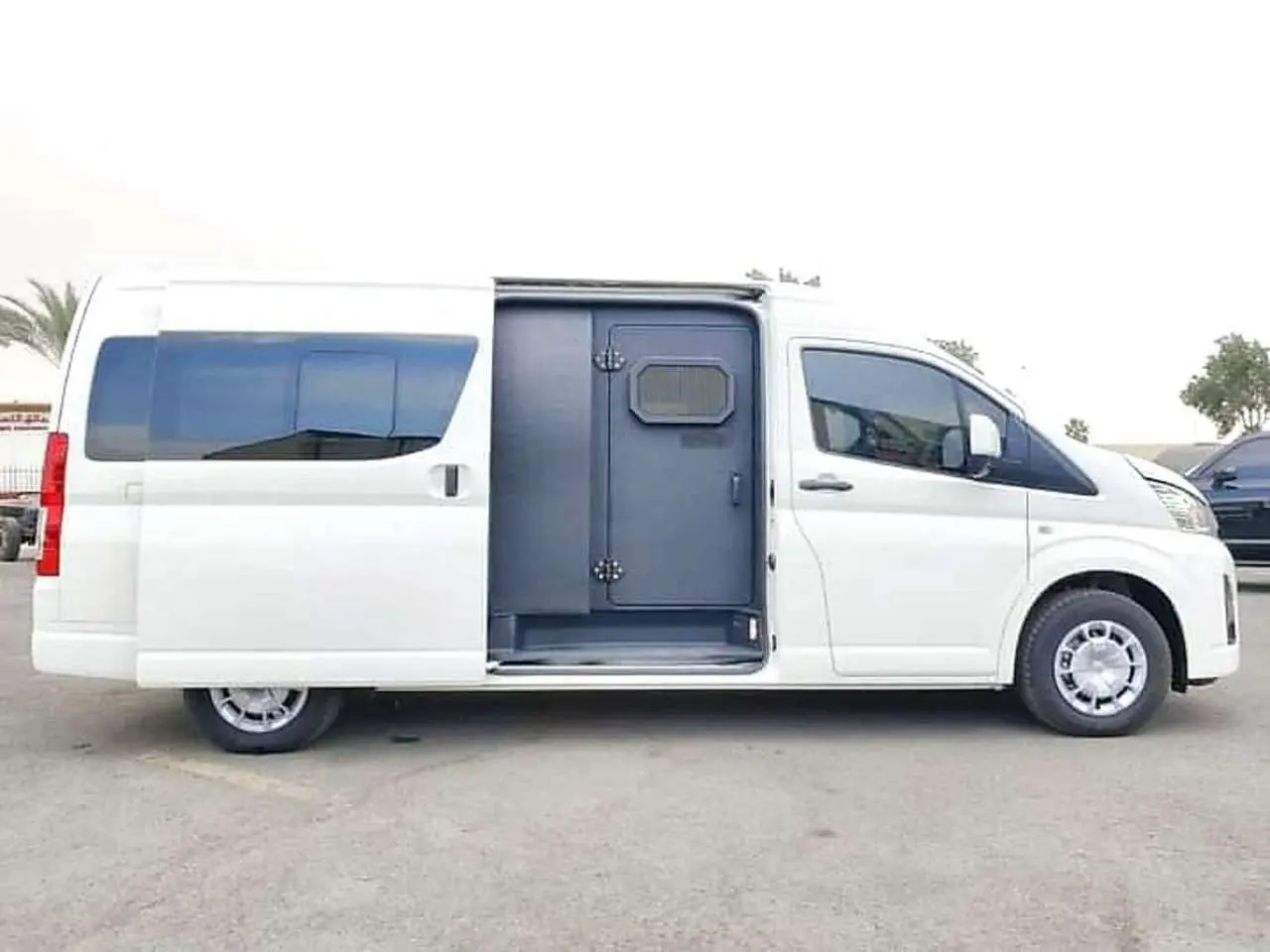
Can I rent a bullet proof Hiace bus in Lagos?
Yes. ToTrip Car Rental Services offers bullet proof Hiace bus rental in Lagos, chauffeur-driven and quoted on request, for small VIP groups and security teams. Book 24/7.ToTrip is a Lagos car rental company that genuinely provides the bulletproof Toyota Hiace bus for secure group transport. See the full fleet.
On this page
- What a bullet proof Hiace bus is
- Why choose a Hiace instead of an armoured SUV or Coaster
- Who books an armoured Hiace in Lagos
- Seating and capacity
- What a booking includes
- Using the vehicle across Lagos
- Airport arrivals and departures
- How to plan a protected group movement
- Safety is more than the vehicle
- Hiace compared with other vehicles
- Hotel and venue arrivals
- Conferences and delegations
- Corporate leadership teams
- Site visits and project teams
- Private events and family occasions
- Evening and night movements
- Luggage and equipment
- Multi-day and extended hire
- Communication on the day
- What the chauffeur does
- Advice for first-time visitors to Lagos
- Common mistakes when booking
- Embassies and international organisations
- Government offices and courts
- Medical visits
- Public figures and high-profile guests
- Insurance and paperwork
- Rainy season, flooding and the dry season
- How far ahead to book
- Questions to ask when you have a security adviser
- A short guide to the main areas
- Trips outside Lagos
- A short glossary
- After the trip
- How to book step by step
- What to tell ToTrip before you book
- The day of the trip
- Choosing routes in Lagos
- Island and mainland crossings
- Stops, breaks and waiting
- Cabin comfort for a longer day
- When one Hiace is not enough
- Repeat and corporate accounts
- Passenger conduct and etiquette
- Honest expectations
- How to reach ToTrip
- Gated estates and compounds
- Church programmes and religious gatherings
- Media and film crews
- Oil, gas and industrial teams
- Visitors and tourism groups
- Sports teams and delegations
- Humanitarian and development teams
- Shuttle loops between venues
- Comparing quotes sensibly
- Confidentiality and discretion
- Accessibility and special needs
- Feedback and resolving problems
- A pre-trip checklist
- Documents and identification
- Festive seasons and public holidays
- Road closures and public events
- Having a simple contingency plan
- Phones, networks and charging
- Compared with taxis and ride-hailing
- What affects the quote
- Hiace compared with a Sprinter
- The value of local knowledge
- Advice for group leaders
- The day before
- Seating and arrival order
- Long days and driver rest
- Photography and social media
- When the group splits
- Small teams of four to six
- Planning the return journey
- Meeting guests on arrival
- Areas covered across Lagos
- Why clients choose ToTrip for this service
- The wider ToTrip fleet
- Read the terms before you confirm
- Prayer times and religious observance
- Meals and refreshments on long days
- Children and older passengers
- Language and communication
- Door and kerbside protocol
- Checkpoints and official instructions
- Coordinating more than one vehicle
- Vehicle readiness on the day
- Heat, humidity and comfort
- Planning summary
- Reviewing the booking afterwards
- Understanding the passenger's needs
- Thinking about risk in plain terms
- Checking routes in advance
- Varying times and routes
- Positioning the vehicle
- The arrival sequence
- The departure sequence
- Handing over at a hotel
- Handling luggage safely
- Briefing the chauffeur
- A simple communication protocol
- Managing fatigue
- A weather plan
- Fuel and readiness
- Planning a sensible budget
- Putting the agreement in writing
- Protecting your information
- Courtesy towards staff and drivers
- Planning around big events
- Keeping a simple trip log
- Island districts at a glance
- Mainland districts at a glance
- Airport terminals and arrivals
- When a standard Hiace is enough
- A checklist for the coordinator
- Questions to ask before booking
- Keeping a contact list
- Working while in the vehicle
- Preparing for longer journeys
- Short-notice requests
- A short rehearsal for important days
- Guidance for guests in the vehicle
- Records for organisations
- What reliability looks like
- Planning ahead for regular travel
- Closing checklist
- A final word before you book
- Frequently asked questions
What a bullet proof Hiace bus is
A bullet proof Hiace bus is a Toyota Hiace minibus that has been armoured so that it can carry a small group under protection. The Hiace is a high-roof passenger van, and it is already one of the most common group vehicles on Lagos roads. When it is armoured, the body panels and glass are reinforced and the vehicle is set up for people who need security in transit as well as space.
The reason clients ask for it is simple. A security-conscious principal rarely travels alone. There is an aide, a coordinator, sometimes a security adviser and a few staff. Splitting that group across several cars makes the movement harder to manage. One armoured vehicle that holds the whole party keeps everyone together, which is easier to plan and easier to supervise.
ToTrip Car Rental Services offers armoured vehicles with a trained chauffeur. The Hiace sits between the armoured Land Cruiser and Mercedes GLS, which suit very small parties, and the armoured Coaster, which suits larger ones.
Why choose a Hiace instead of an armoured SUV or Coaster
The choice comes down to group size and how the vehicle will be used. An armoured SUV is the right tool for one principal and one or two companions. An armoured Coaster is the right tool when a delegation of twenty or more has to move together. The Hiace answers the middle case: a team too big for an SUV and too small to justify a full coach.
A Hiace is also narrower and shorter than a Coaster. That matters in Lagos, where a vehicle must get through hotel forecourts, estate gates, church compounds, office car parks and congested streets in places such as Victoria Island, Ikoyi, Lekki and Ikeja. A smaller body is simpler to position at an entrance and to turn in a tight space.
The Hiace is also familiar. Drivers, hotel doormen and event marshals know what it is and where it can stop. Because it does not look unusual, it does not draw as much attention as a convoy of several vehicles.
Who books an armoured Hiace in Lagos
Typical clients include company leadership teams, visiting executives with their staff, delegations attending a conference, project teams going to a site, families attending a private event and organisations that run security-conscious movements as part of their normal operations.
Some bookings are one-off, such as an arrival from the airport or a single day of meetings. Others run for several days, with the same vehicle and the same chauffeur so the team learns the routine. Both are normal, and the booking can be shaped to fit.
Seating and capacity
A standard ToTrip Toyota Hiace seats 14 to 18 passengers. An armoured conversion adds weight and can change how the cabin is arranged, so the usable seating of a protected Hiace is not simply the standard number. The exact seat count depends on the specific vehicle assigned to your booking.
Tell ToTrip how many people will travel, how much luggage they carry and whether anyone needs extra space for equipment. The answer decides whether the Hiace is right or whether a Coaster or two smaller vehicles would serve better. Confirm the seat count for your date before you rely on it.
What a booking includes
Every armoured booking is chauffeur-driven. There is no self-drive option. The chauffeur is trained for the work, knows the Lagos road network and understands that the job is to move people calmly and on time rather than quickly.
Beyond the vehicle and driver, the details are agreed with ToTrip before the day: pickup point and time, the route, the drop-off, waiting time and any stops. Putting these on paper in advance removes guesswork on the day, and it gives the chauffeur a clear plan.
Using the vehicle across Lagos
In Lagos a protected vehicle is used for several recurring movements. Airport arrivals and departures at the Murtala Muhammed International Airport are common, because the first and last hour of a trip is when many visitors feel least familiar with the city. Hotel to meeting runs across Victoria Island, Ikoyi and Lekki are another regular use, as are movements to Ikeja for government and corporate offices.
Island and mainland journeys depend heavily on the time of day. Crossing the Third Mainland Bridge or the Lekki-Ikoyi corridor at the wrong hour can add a lot to a journey. A good plan builds in margin and avoids the heaviest traffic where the schedule allows.
For events, the chauffeur can be briefed on the venue entrance, the drop-off point and the pickup point, so the group does not have to wait in an exposed position.
Airport arrivals and departures
For an airport arrival, share the flight number and the time of landing. ToTrip tracks the flight rather than relying on the scheduled time, so the vehicle is positioned for the real arrival. The group is met, helped with luggage and taken straight to the vehicle.
For a departure, the pickup is timed backwards from check-in, with allowance for the journey and for the terminal. A group of ten or more with luggage needs more time than a single traveller, and the plan should reflect that.
How to plan a protected group movement
Good planning is mostly about information. Before the booking, gather the date and times, the number of passengers, the pickup and drop-off addresses, any planned stops, the luggage involved and the name and number of one person who will coordinate on the day.
Share the schedule early. A team that gives a week's notice can be served better than one that calls the same morning, because vehicle and chauffeur availability can be confirmed and the route considered. Same-day requests are still possible, but they depend on what is available.
If your own security adviser is involved, include them in the conversation. ToTrip can fit the booking around their requirements rather than the other way round.
Safety is more than the vehicle
Armour is one layer. It does not replace sensible planning, a calm driver, a varied schedule and good communication. A bullet proof Hiace should be treated as one part of a wider security approach, not as a guarantee on its own.
ToTrip does not publish a protection rating on this page. If your security team needs specific technical details about the vehicle, ask for them directly and have them confirmed for the vehicle assigned to you.
Hiace compared with other vehicles
The Hiace suits a team of moderate size. The armoured Land Cruiser and Mercedes GLS suit one principal with one or two companions and are more manoeuvrable in a small space. The armoured Coaster suits a large delegation and offers an executive reclining cabin. A standard, non-armoured Hiace suits an ordinary group trip where protection is not a requirement.
Hotel and venue arrivals
Most of the risk in a short trip sits at the two ends: the moment a group leaves a building and the moment it arrives. For hotel and venue arrivals, ask the venue where vehicles are allowed to stop, how close the entrance is and whether there is a covered drop-off. Share that with ToTrip so the chauffeur can plan the approach.
In busy areas such as Victoria Island, Ikoyi, Lekki and Ikeja, entrances can be crowded at peak hours. A named contact at the hotel or venue, with a phone number the chauffeur can call, saves time and avoids the group waiting in the open.
Conferences and delegations
A conference brings a predictable pattern: a morning arrival, sessions, lunch, an afternoon block and an evening event. The Hiace suits a delegation of moderate size that wants to move as one group between a hotel and the venue.
Send the programme to ToTrip in advance. A printed schedule with times and venues lets the chauffeur plan around the busiest periods and keep the group on time. If the programme changes, tell the coordinator on the day so the plan can be adjusted rather than improvised.
Corporate leadership teams
Companies use a protected vehicle when leadership travels together to board meetings, site inspections, investor visits or official engagements. Keeping the team in one vehicle makes it easier to manage who is where, and it avoids the delays that come from coordinating several cars.
For regular corporate use, a repeat booking with the same chauffeur is often the most practical arrangement. The driver learns the team's preferences, the usual addresses and the way the group likes the trip to run.
Site visits and project teams
Project teams often travel to a plant, a construction site or a facility outside the main business districts. These journeys can involve roads that are less familiar and arrival points that are less controlled than a hotel forecourt.
For a site visit, share the address, the access route, the expected time on site and who will meet the group. Ask whether the vehicle can wait close to the entrance. The more the chauffeur knows before leaving, the less the team has to decide on the road.
Private events and family occasions
Families and private clients also ask for protected group transport for funerals, naming ceremonies, anniversaries, weddings and other gatherings where the guest list is publicly known. A vehicle that carries the principal family members together keeps them under supervision from door to door.
For these bookings, agree the exact pickup address, the order of stops and the time the group expects to leave. Large events can end later than planned, so confirm how waiting time will be handled before the day.
Evening and night movements
Evening trips call for extra care. Visibility is lower, traffic patterns change and some areas are less comfortable after dark. Plan the return journey as carefully as the outward one, and agree the pickup time and place before the group goes in.
Avoid leaving the end of an evening open. A fixed pickup point and a phone number for the chauffeur mean the group walks directly to the vehicle rather than waiting outside.
Luggage and equipment
An armoured vehicle carries extra weight, and the cabin may be arranged differently from a standard Hiace. That affects how much luggage and equipment fits comfortably alongside the passengers.
Tell ToTrip what you will carry: the number of bags, any cases, display material or equipment. If the load is large, a second vehicle for luggage may be the better answer, and it is easier to arrange before the day than at the kerb.
Multi-day and extended hire
For a visit of several days, a fixed vehicle and chauffeur reduce the number of things to coordinate. The same driver knows the group, the hotel and the routes from the first morning.
Agree the daily start time, the end time and how extra hours will be handled. A short daily message to the coordinator, confirming the next day's first pickup, keeps the plan clear without long calls.
Communication on the day
Name one coordinator on your side and share their number with ToTrip. That person is the single point of contact for the chauffeur, which prevents the driver from receiving conflicting instructions from several people in the group.
Keep messages short and practical: where the group is, when it will be ready and any change. Avoid posting live movements on public channels.
What the chauffeur does
The chauffeur drives, but also manages the practical side of the journey: arriving early, positioning the vehicle, watching the road ahead and keeping the cabin calm. The role is to deliver the group on time and without drama.
Passengers can help by being ready at the agreed time and following the plan. Changes of destination are possible, but they work best when the chauffeur and coordinator discuss them first.
Advice for first-time visitors to Lagos
Visitors who have not been to Lagos before should expect that journey times vary a great deal. A distance that looks short on a map can take a long time at the wrong hour, so allow margin between engagements.
Share your full itinerary with ToTrip on arrival. A local plan that accounts for traffic, bridge crossings and venue access is worth more than the most capable vehicle used without one.
Common mistakes when booking
The most frequent mistakes are late notice, an incomplete passenger count, no named coordinator and no information about luggage. Each one is easy to avoid with a short checklist.
Another mistake is treating armour as a substitute for planning. A protected vehicle works best when it is part of a wider approach that includes sensible routes, varied timing and clear communication.
Embassies and international organisations
Diplomatic and international missions often move small teams between an embassy, a residence, meeting venues and the airport. A protected Hiace suits a team of that size, and keeping everyone in one vehicle simplifies the plan.
Send ToTrip the names of the pickup and drop-off points and any access arrangements, such as pre-clearance with a gate. Where a mission has its own security officer, include them in the conversation so the booking follows their procedures.
Government offices and courts
Government buildings and courts have their own entry rules. Some restrict where vehicles may stop, and some limit how many people can enter together. Ask the office or registry what applies before the day.
Share the address, the expected time of the appointment and a realistic estimate of how long it will run. Hearings and meetings often overrun, so agree how waiting time will be handled before you leave.
Medical visits
Hospital and clinic visits can be time-sensitive and tiring for the passenger. A protected vehicle with a calm, punctual chauffeur lets the family concentrate on the appointment rather than on logistics.
Confirm the entrance the passenger will use, whether a wheelchair or other assistance is needed, and who will meet the group. Tell ToTrip about any mobility needs when booking so the vehicle and the plan can be arranged to suit.
Public figures and high-profile guests
People with a public profile often prefer to arrive and leave without attention. A Hiace is a familiar shape on Lagos roads, and it can be less conspicuous than a convoy of several vehicles.
Discretion also depends on behaviour. Share the schedule only with those who need it, avoid announcing movements in advance, and agree a simple way for the coordinator to reach the chauffeur privately.
Insurance and paperwork
Ask ToTrip what insurance applies to the vehicle and what it covers for the passengers. Do not assume; request the details in writing for your booking, and pass them to your own security or risk team if they need them.
Have the booking confirmation, the chauffeur's name and the vehicle details to hand on the day. Organisations that run formal travel policies often need these for their records.
Rainy season, flooding and the dry season
Lagos weather affects travel more than many visitors expect. In the rainy season, heavy downpours can flood low-lying roads and slow traffic sharply. In the dry season, harmattan haze can reduce visibility on some days.
Build extra time into schedules during the wet months, and let the chauffeur choose the route that is passable at the time. A plan that allows for a detour is more reliable than a plan that assumes the shortest route will be open.
How far ahead to book
Book as early as you can. Early notice gives ToTrip time to confirm the vehicle, assign a chauffeur and consider the route, and it gives you time to share details about the group.
Peak periods such as festive seasons, large conferences and major public events place extra demand on vehicles. Same-day requests are considered, but availability cannot be promised, so do not leave a critical movement to the last hour.
Questions to ask when you have a security adviser
If your organisation has a security adviser, involve them early. They may want to know the vehicle's specification, the chauffeur's experience, the proposed routes and how communication will work during the trip.
Put their questions to ToTrip directly, and ask for answers that apply to the vehicle assigned to your date. Specific, confirmed answers are more useful than general descriptions.
A short guide to the main areas
Victoria Island and Ikoyi hold many hotels, embassies and corporate offices. Lekki and Ajah stretch east along a corridor where traffic can build quickly. Ikeja, on the mainland, is home to the airport, government offices and a large commercial district.
Moving between the island and the mainland usually means crossing a bridge, and the timing of that crossing can decide how long a journey takes. Ask the chauffeur for a realistic estimate for your hour of travel.
Trips outside Lagos
Some clients ask about movements beyond Lagos, for example to nearby states or border towns. Whether a protected Hiace is available for a longer journey depends on the route, the duration and the arrangements, so raise it when you request your quote.
For a longer trip, share the full route, the stops, the overnight plan and the return date. Longer journeys need more preparation, and the plan should be confirmed before you commit to it.
A short glossary
Armoured means that the body and glass of a vehicle have been reinforced for protection. Chauffeur-driven means that a trained driver operates the vehicle and the client does not. A coordinator is the person on the client's side who communicates with the driver. A principal is the person whose movement the plan is built around.
Waiting time is the period the vehicle stays at a stop while the group is inside. Drop-off and pickup points are the exact places where the group gets out and gets in. Agreeing these terms with ToTrip at the start avoids confusion later.
After the trip
When the booking ends, confirm that everything has been returned from the vehicle and that the group has what it needs. Give the coordinator a moment to note anything that worked well or could be improved.
If you plan to book again, share that feedback with ToTrip. A short note about timing, pickup points or luggage helps the next booking run more smoothly, particularly for repeat or multi-day hire.
How to book step by step
Start by contacting ToTrip by phone or WhatsApp with your date, the number of passengers and a short description of the movement. You will be asked for details such as the pickup and drop-off points and how long you need the vehicle.
ToTrip then confirms availability and gives a quote. Once you agree, the details are written down: the vehicle, the chauffeur, the times and the contact numbers. Keep that confirmation where the coordinator can find it.
What to tell ToTrip before you book
The more complete your first message, the faster the booking moves. Include the date, the start time, the places, the number of people, the luggage, any mobility needs and the name of the coordinator.
Also say whether the movement is a single trip or a series. A series of trips over several days is planned differently from a one-off airport run, and the quote reflects that.
The day of the trip
On the day, the chauffeur arrives early and confirms the pickup point with the coordinator. Passengers should be ready at the agreed time so the vehicle does not wait in an exposed position.
Keep the cabin orderly. Stow bags before the vehicle moves, and let the chauffeur know if anyone needs a stop. A calm start tends to set the tone for the whole journey.
Choosing routes in Lagos
A good route is not always the shortest. The chauffeur considers traffic, road works, flooding and the safety of the surroundings. On the same day, the best route in the morning may be different from the best route in the evening.
Where possible, agree a primary route and a backup before leaving. If conditions change, the chauffeur can switch without hesitation and tell the coordinator.
Island and mainland crossings
Lagos is built around its lagoon, and many journeys involve a bridge. The Third Mainland Bridge, the Eko Bridge and the Carter Bridge are among the connections between the mainland and the island, and the Lekki-Ikoyi Link Bridge links Lekki with Ikoyi.
Bridge traffic can change quickly. Allow extra time for a crossing, particularly in the morning and evening peaks, and ask the chauffeur for an estimate based on the hour you plan to travel.
Stops, breaks and waiting
Plan for stops in advance. A group that needs a comfort break, a meal or a short errand is easier to serve when the stop is part of the plan.
Choose stops where the vehicle can wait close by and where the group can return quickly. Avoid unplanned stops in unfamiliar areas, and let the chauffeur decide where to park.
Cabin comfort for a longer day
A day of meetings can mean hours in the vehicle. Ask about air conditioning, charging for phones and where bottled water is kept, and tell ToTrip if anyone has particular needs.
Comfort also means space. A group that is crowded in a cabin becomes tired and impatient sooner. If the group is near the upper limit of what the vehicle holds, consider a second vehicle.
When one Hiace is not enough
A single Hiace suits a team of moderate size. If the group is larger, or if some passengers need to travel separately from others, you may need two vehicles or a Coaster.
A second vehicle can also carry luggage or equipment. Raise the question early so ToTrip can advise on a combination that suits the movement.
Repeat and corporate accounts
Organisations that use protected transport regularly benefit from a standing arrangement. The booking process becomes quicker, the chauffeur knows the team, and the routines are already in place.
Ask ToTrip about arrangements for repeat hire. Terms are agreed directly, so describe how often you expect to travel and for how long.
Passenger conduct and etiquette
A short briefing helps the group. Ask passengers to be ready on time, to keep the vehicle tidy and to follow the chauffeur's guidance about getting in and out.
Respect for the chauffeur's judgement matters most when conditions change. If the driver advises against a stop or a route, the safest course is to follow that advice and discuss the plan afterwards.
Honest expectations
An armoured Hiace offers protection and space for a small group, but it does not remove every risk. It does not make a rushed, poorly planned trip safe, and it cannot replace judgement.
Be clear with ToTrip about what you need. If the requirement goes beyond what a Hiace can offer, ask for an alternative rather than stretching the vehicle.
How to reach ToTrip
You can call +2349137818188 or message on WhatsApp for a quote. The line is available around the clock, so you can raise a requirement at any hour.
Have your details ready when you call: the date, the number of passengers, the places and the name of your coordinator. A clear first message saves time for everyone.
Gated estates and compounds
Many Lagos addresses sit inside gated estates, hotels or office compounds with their own security procedures. A vehicle arriving without notice can be held at the gate, which leaves the group waiting.
Ask the host to register the vehicle in advance, and give ToTrip the gate name, the contact at the gate and any pass or code needed. A Hiace is easy to position at most entrances, and a prepared arrival is faster than an improvised one.
Church programmes and religious gatherings
Leaders and groups travelling to conventions, crusades, retreats and weddings sometimes ask for protected transport, especially when a guest speaker or senior figure is attending. Large gatherings can be crowded, with traffic around the venue building up before the start and after the close.
Agree the drop-off point and the pickup point with the organisers, and plan the return carefully. Ask where the vehicle can wait, since the area around a busy venue may be restricted.
Media and film crews
Crews covering events or working on location often carry equipment as well as people. Cases, cameras and lighting take space, and the weight of an armoured vehicle limits what it can carry on top of the passengers.
List the equipment when you book, and tell ToTrip whether the crew will be filming from or near the vehicle. Some requests may not suit a protected vehicle, so raise them early.
Oil, gas and industrial teams
Teams from energy and industrial companies travel to offices, terminals, yards and meetings with partners. These journeys often combine a corporate setting with a more demanding environment.
Share the route, the sites and any access requirements, such as site inductions or passes. If your company has its own travel-risk rules, send them to ToTrip so the plan can follow them.
Visitors and tourism groups
Some visitors choose a protected vehicle for sightseeing and for moving between hotels, restaurants and attractions. A small group can travel together, with a driver who knows the city.
Tell ToTrip which places you want to see and how long you want to stay at each. A local plan will tell you which stops fit together and which are better on another day.
Sports teams and delegations
Teams, officials and support staff often travel between a hotel, a training ground and a stadium. Match days bring heavy traffic and tight timetables.
Give ToTrip the kick-off time, the arrival time the organisers expect and the equipment the team carries. Plan to arrive early and to leave after the crowd has thinned, if the schedule allows.
Humanitarian and development teams
Organisations working in health, education and development move staff between offices, partner meetings and field sites. Many have their own security policies for travel.
Share the policy with ToTrip so the booking meets it. Be clear about the route and the expected return time, and agree who the coordinator is on both sides.
Shuttle loops between venues
Some events need a vehicle to run a loop between two or three places, for example a hotel, a venue and a restaurant. This works best with a fixed timetable that the group knows.
Agree the stop sequence, the interval between runs and how late the shuttle will run. Give the coordinator the chauffeur's number so the group can reach the vehicle if a run is delayed.
Comparing quotes sensibly
When you compare quotes for protected transport, compare like with like. Check the vehicle, the hours, the route area, whether a chauffeur is included, how waiting time is handled and what happens if the plan changes.
A lower figure that leaves out important items may cost more in the end. Ask each provider to confirm in writing what the figure includes.
Confidentiality and discretion
Clients often ask that the details of their movement are kept private. Share the schedule only with those who need it, and ask ToTrip how it handles booking information.
Within your group, use the coordinator as the channel for information. Avoid sharing live movements on open platforms.
Accessibility and special needs
Passengers who use a wheelchair, walk slowly or need extra time can travel in a Hiace, but the cabin height and layout matter. Tell ToTrip about any needs when you book so the vehicle and the plan can be arranged to suit.
Allow more time for boarding and for the drop-off. A relaxed schedule is better for every passenger than a rushed one.
Feedback and resolving problems
If something goes wrong on a booking, tell ToTrip as soon as possible. Early notice gives the chance to put it right during the trip rather than afterwards.
Be specific about what happened, when and where. Clear feedback helps ToTrip improve the service and helps you get a proper answer.
A pre-trip checklist
Before the trip, confirm the date, the pickup time and place, the drop-off, the passenger count, the luggage, the coordinator's name and number, and the chauffeur's name. Write them in one message and keep it where the coordinator can find it.
Check that every passenger knows the meeting point and the time. A group that is late costs the whole schedule, so build in a margin for the first pickup.
Documents and identification
Some venues, airports and offices ask for identification at the gate. Passengers should carry what is needed for the places they plan to visit, and the coordinator should know who is bringing what.
If a venue requires a guest list or a pass for the vehicle, arrange it in advance. Share the vehicle and chauffeur details with the host so the arrival is smooth.
Festive seasons and public holidays
Lagos becomes busier at holiday times. Roads fill with travellers, venues host more events and some businesses close or change their hours. December in particular brings many visitors and a full calendar.
Book early for these periods and allow longer journey times. Confirm pickup points in advance, since venues may be crowded and parking more limited than usual.
Road closures and public events
Marathons, processions, official visits and other public events can close roads or divert traffic, sometimes with little notice. A route that works on one day may not work on the next.
The chauffeur keeps track of conditions and chooses a route accordingly. Tell the coordinator if the group wants to be informed of changes, and keep a margin in the timetable.
Having a simple contingency plan
A good plan includes a backup. Agree what the group will do if the vehicle is delayed, if a venue is closed or if someone falls ill. Decide who makes the decision and how it is communicated.
Keep the plan simple, and make sure the coordinator and the chauffeur both know it. In a real emergency, follow the instructions of the relevant authorities and your own security team.
Phones, networks and charging
Mobile coverage in Lagos is usually adequate, but it can drop in some places and at busy times. Make sure the coordinator has the chauffeur's number saved and that the phone is charged before leaving.
Carry a charger or a power bank. Ask ToTrip whether the vehicle has charging points for the cabin, and do not rely on them without confirmation.
Compared with taxis and ride-hailing
Ride-hailing apps and taxis are convenient for individuals, but they do not provide an armoured vehicle, a chauffeur known to the provider or a fixed plan for a group. Group movements are hard to keep together in several separate cars.
A chauffeur-driven protected Hiace puts the group in one vehicle with one driver and one plan. It costs more than a taxi because it is a different service.
What affects the quote
The quote depends on factors such as the date, the number of hours or days, the route, the number of vehicles and the arrangements for waiting time. A longer or more complex booking is quoted differently from a single short transfer.
Giving full details at the start leads to a more accurate figure. Ask what is included, and confirm anything you are unsure of in writing.
Hiace compared with a Sprinter
ToTrip also offers Mercedes Sprinter buses for groups. A standard Sprinter generally suits a somewhat larger group than a standard Hiace. Whether an armoured version of any vehicle is available depends on the booking, so ask when you request a quote.
Choose the vehicle that fits your group size and requirements. If you are unsure, describe the group to ToTrip and ask for advice.
The value of local knowledge
A chauffeur who knows Lagos understands the shortcuts, the bottlenecks and the places where a vehicle can stop safely. That knowledge matters more than the vehicle's size on many journeys.
Ask for the chauffeur's advice on timing and routes. Use it to adjust the plan, particularly if you are visiting for the first time.
Advice for group leaders
If you lead the group, brief your team before the trip. Tell them the departure time, the plan for the day and the arrangements for luggage. Name the coordinator and make sure everyone has the number.
Lead by example: be ready early, follow the plan and respect the chauffeur's advice. A group that behaves with discipline makes the movement simpler for everyone.
The day before
Confirm the booking with ToTrip the day before. Check the weather forecast, review the route and make sure the passenger list is final.
Send a short reminder to the group with the pickup time and place. Charge devices and pack in advance, so the morning is calm.
Seating and arrival order
Groups often have an order in which people sit and leave the vehicle. Decide it before the trip, so passengers are not rearranging themselves at the kerb. The principal, senior guests and aides each have a place that suits the plan.
Tell the chauffeur who sits where and who leaves first at each stop. A clear order saves seconds at the door, and seconds count when a group wants to move quickly from vehicle to building.
Long days and driver rest
A long programme tires the chauffeur as well as the passengers. A driver who is alert drives more safely, so plan the day with realistic hours and allow breaks where possible.
For multi-day bookings, agree the daily finish time in advance. If a day is likely to run late, tell ToTrip early so arrangements can be made.
Photography and social media
Photos of the vehicle, the group and the route can reveal more than people intend. A picture posted while the group is still moving shows where they are and where they are going.
Ask the group to hold off posting until the movement is complete, and to avoid showing registration plates, addresses and schedules. Discretion costs nothing and protects everyone.
When the group splits
Sometimes part of the group needs to leave early, arrive later or go somewhere else. Plan this with the coordinator so the chauffeur knows who is staying with the vehicle.
If the split is large, you may need a second vehicle. Raise it as soon as you know, because last-minute changes are harder to arrange.
Small teams of four to six
A team of four to six people can use a Hiace comfortably, with room for bags. The advantage over an armoured SUV is extra space and a cabin where the team can sit together and work.
For very small parties of one or two, an armoured SUV may be a better fit, because it is more manoeuvrable in tight places. ToTrip can advise on the choice.
Planning the return journey
Many bookings focus on the outward trip and leave the return open. The return deserves the same care: confirm the pickup point, the time and how the group will be contacted.
If the finish time is uncertain, agree how long the vehicle will wait and how the coordinator will give the signal to come forward. A clear plan keeps the group from standing outside.
Meeting guests on arrival
When guests arrive in Lagos, a meeting at the airport arrivals area is a good first impression. The chauffeur or a representative can hold a name sign, help with luggage and lead the group to the vehicle.
Share the names of the guests, their flight details and the contact number of the person meeting them. If a flight is delayed, the plan adjusts to the actual landing time.
Areas covered across Lagos
ToTrip operates across Lagos, including the island areas of Victoria Island, Ikoyi and Lekki and mainland areas such as Ikeja, Yaba and Surulere. If you need to travel beyond these areas, ask when you request your quote.
Journey times between areas vary greatly with the hour. Ask the chauffeur for an estimate before you fix a schedule.
Why clients choose ToTrip for this service
ToTrip provides chauffeur-driven armoured vehicles with trained personnel, quotes on request and bookings at any hour. The Hiace joins an armoured range that includes SUVs and a Coaster, so the right vehicle can be matched to your group.
Clients also value having a single provider for a mix of needs, from an armoured Hiace to a standard coach for the rest of the party.
The wider ToTrip fleet
Besides armoured vehicles, ToTrip offers luxury cars, SUVs, minibuses and coaches. A visiting group might use a protected Hiace for the principal party and a standard Coaster for the wider team.
Describe the whole movement, and ToTrip can suggest how to combine the vehicles that make sense.
Read the terms before you confirm
Before you confirm a booking, read what has been agreed. Check the dates, hours, areas, waiting time, extra charges, cancellation arrangements and contact numbers.
If anything is unclear, ask for it in writing. A short message that settles a question is better than an argument on the day.
Prayer times and religious observance
Some passengers observe daily prayers, and schedules should respect them. Ask the group whether stops are needed, and plan them in advance so they do not clash with meetings or arrivals.
During religious festivals and fasting periods, working hours and traffic patterns change. Tell ToTrip about any observances that affect the plan, and allow flexibility in timing so the day runs without strain.
Meals and refreshments on long days
On a long programme, a group needs to eat and drink. Plan meal stops in advance and choose places where the vehicle can wait close by. Passengers who are hungry and tired are slower and less patient.
If refreshments are to be kept in the vehicle, tell the chauffeur. Keep the cabin tidy, and let the chauffeur know of any allergies or special needs among the passengers.
Children and older passengers
Families travelling with young children or older relatives need to think about boarding, seating and pace. Give extra time at every stop, and tell ToTrip when you book if anyone needs help getting in or out.
If you bring a child seat, confirm in advance that it can be fitted in the vehicle. Do not assume, since the cabin of an armoured vehicle may be arranged differently from a standard van.
Language and communication
English is widely used in business in Lagos, and many chauffeurs also speak Yoruba and Pidgin. If your group uses another language, tell ToTrip when you book so the briefing is clear.
Keep instructions to the chauffeur short and in one place, through the coordinator. Clear communication reduces mistakes.
Door and kerbside protocol
The moments at the door are where a movement is most exposed. Agree who opens the door, who steps out first and where the group walks next. Keep the group together and avoid lingering beside the vehicle.
Once passengers are inside the building or inside the vehicle, the chauffeur can move on. A rehearsed routine, even a simple one, makes the whole group more at ease.
Checkpoints and official instructions
Passengers may meet checkpoints or officials directing traffic. Stay calm, follow the chauffeur's lead and let the chauffeur speak for the vehicle. Carry the documents the group may be asked for.
If you are unsure about an instruction, ask the chauffeur or the coordinator rather than acting alone. Courtesy and patience resolve most situations quickly.
Coordinating more than one vehicle
When a movement involves several vehicles, one person should coordinate them. Agree the order, the gaps, the meeting points and what to do if the vehicles are separated.
Share the chauffeurs' numbers with the coordinator, and give each chauffeur the details of the others. A short briefing before departure prevents most confusion.
Vehicle readiness on the day
A vehicle should be clean, fuelled and in good working order before it collects the group. If you have particular requirements for the cabin, mention them when you book.
Ask ToTrip what checks are carried out before a booking and have the answer confirmed for your date. If you notice a problem on the day, tell the chauffeur at once.
Heat, humidity and comfort
Lagos is hot and humid for much of the year, and an armoured vehicle can feel warm if it has been standing in the sun. Ask the chauffeur to cool the cabin before the group boards.
Carry water, and allow groups to cool down before important meetings. Comfort affects how people feel and perform.
Planning summary
To summarise the key steps: decide how many people are travelling, choose the vehicle that fits, share your details early, name a coordinator, plan the route and the stops, and agree the terms in writing.
With those steps done, the movement becomes routine. Most problems come from missing information, not from the vehicle.
Reviewing the booking afterwards
After the trip, review what happened. Note the times, the places and anything that could have gone better, and share the feedback with ToTrip.
A short review helps the next booking. For organisations that travel regularly, it also builds a record of what works for the team.
Understanding the passenger's needs
Every protected movement begins with the person or group being carried. Ask what they expect: how much attention they accept, how long they will travel, what they carry and whether anyone in the party has particular needs. These answers shape the vehicle and the plan.
Principals differ. Some prefer quiet and privacy, while others want to work during the journey. Tell ToTrip which applies so the chauffeur can set the tone of the trip accordingly.
Thinking about risk in plain terms
Risk is a combination of how likely something is and how serious it would be. A planner asks where the group is most exposed, such as at entrances, in slow traffic and at stops, and then reduces that exposure with timing, routes and preparation.
You do not need technical language to do this. A short conversation with the chauffeur and your own security adviser, if you have one, often turns up the points that need attention.
Checking routes in advance
If a trip is important, check the route beforehand. Consider the roads, the likely traffic at the planned hour, any works and the final approach to the venue. A route that looks simple on a map may include a narrow entrance or a market street.
Ask ToTrip whether the chauffeur can drive the route in advance for a major booking. Where this is not possible, ask the chauffeur to review it using current information and to prepare a backup.
Varying times and routes
Predictable patterns are easier for others to watch. For a multi-day booking, vary departure times and routes within reason, and do not announce them widely.
Variation should not make the day chaotic. The aim is modest changes that the chauffeur and the coordinator both know about, so the group still runs on time.
Positioning the vehicle
Where the vehicle stands at an entrance matters. It should be close enough for a short walk, in a place where it will not block others and where the chauffeur has a clear view.
Agree the spot with the host or venue ahead of time. If it is not available on the day, the chauffeur chooses the next best option and tells the coordinator.
The arrival sequence
On arrival, the chauffeur stops, the coordinator checks the entrance and the group steps out in the agreed order. The vehicle stays nearby until the group is inside.
Keep the sequence short and steady. Avoid chatting on the pavement, and keep phones and bags in hand so no one needs to return to the vehicle.
The departure sequence
For departure, the coordinator tells the chauffeur when the group is ready, and the vehicle moves to the pickup point. The group walks out together and boards in the agreed order.
Do not call the vehicle forward until the group is ready to leave. A vehicle that waits at the door draws attention, and a group that waits at the door is exposed.
Handing over at a hotel
Hotels have porters, doormen and security staff who can help with a smooth handover. Tell the front desk about the vehicle, the time and the group, and ask where the vehicle can stop.
Agree who handles luggage. A porter who knows the plan keeps bags moving, and a coordinator who confirms the count avoids items being left behind.
Handling luggage safely
Count bags at every stage: loading, unloading and at each hotel. A missing bag discovered later is harder to trace.
Keep valuables and documents with the passengers, not in the luggage space. Label bags clearly, and ask the chauffeur to confirm the load before leaving.
Briefing the chauffeur
A good briefing covers the schedule, the places, the order of events, the contacts and any special requirements. Give it in writing or by message, and follow it with a short call if the movement is complex.
Invite the chauffeur's questions. A driver who understands the purpose of the trip can anticipate problems and suggest solutions.
A simple communication protocol
Agree how the chauffeur and coordinator will communicate: calls, messages or both. Decide who calls whom, what counts as urgent and what is routine.
Keep routine messages short. Reserve calls for changes and problems, so the line is free when it matters.
Managing fatigue
Tired passengers make worse decisions and tired drivers make more mistakes. On busy days, plan rest into the schedule and avoid late finishes where you can.
If a long programme is unavoidable, tell ToTrip in advance so arrangements can be made for the chauffeur's rest.
A weather plan
Heavy rain can slow traffic and flood roads. Check the forecast the night before and discuss with the chauffeur whether to leave earlier or take another route.
Keep umbrellas and spare shoes handy for passengers, and allow time to walk from the vehicle under cover where possible.
Fuel and readiness
A vehicle that runs low on fuel at a bad moment is an avoidable problem. Ask ToTrip to confirm that the vehicle will be fuelled and ready before the trip.
For multi-day bookings, agree when and where the vehicle is refuelled so it does not disrupt the programme.
Planning a sensible budget
Plan the budget around the full movement and not only the vehicle. Consider the hours, any waiting time, the number of vehicles and the days involved.
Ask ToTrip for a quote that lists what it includes, and keep a margin for changes. A clear budget removes surprises later.
Putting the agreement in writing
Written agreement protects both sides. It should state the vehicle, the dates, the times, the places, the hours, the waiting time and the terms for changes.
Save the confirmation where the coordinator can find it, and check it against the plan before the trip.
Protecting your information
Booking details include names, addresses and schedules. Share them only with those who need them, and ask how they will be stored and used.
Within your organisation, limit the list of people who see the full plan. The fewer the people, the lower the chance of a leak.
Courtesy towards staff and drivers
A respectful group gets better service. Greet the chauffeur, thank the staff and keep requests clear and polite.
Good relationships also help when plans change, because people are more willing to adapt for those who have treated them well.
Planning around big events
Lagos hosts large events across the year, including concerts, conferences, festivals and sporting fixtures. They bring crowds, closures and heavier traffic.
Check the calendar for your dates and tell ToTrip about any event near your route. A little knowledge in advance can save a great deal of time.
Keeping a simple trip log
A short record of each trip, with times, places and notes, helps with planning and with later review. The coordinator can keep it in a message thread or a note.
Over a series of bookings, the log shows which routes and times work and which do not. It becomes a useful guide for the next trip.
Island districts at a glance
Victoria Island, Ikoyi, Oniru, Lekki Phase 1 and Banana Island hold many of Lagos's hotels, offices and residences. Eko Atlantic City is a newer district on the waterfront. Entrances in these areas are often managed, so arrival plans matter.
Traffic between these districts changes with the hour and with events. Allow extra time on weekday mornings and evenings, and ask the chauffeur to suggest the best moment to move.
Mainland districts at a glance
Ikeja is the main mainland hub, with the airport, government offices and commercial areas. Yaba, Surulere, Maryland and Gbagada each have their own character and traffic patterns.
If your programme includes the mainland, plan the crossing carefully and tell ToTrip the exact address of each stop. Many mainland addresses are hard to find, and a pin on a map helps.
Airport terminals and arrivals
Murtala Muhammed International Airport has separate international and domestic terminals. Confirm which terminal your guests will use, since the meeting point depends on it.
Share the airline, the flight number and the expected arrival time with ToTrip. Ask where the vehicle can wait, and agree how the group will be contacted once they clear arrivals.
When a standard Hiace is enough
Not every group movement calls for armour. A routine staff shuttle, a church outing or a transfer for a casual group may be well served by a standard Hiace.
Be honest about the requirement. ToTrip can advise whether protection is needed or whether a standard vehicle will do, and the cost of the two differs.
A checklist for the coordinator
The coordinator confirms the booking, shares the plan, checks the pickup, tracks the schedule and keeps the contacts. A short list helps them stay on top of it.
Keep the list simple: confirm the vehicle, confirm the chauffeur, confirm the times, confirm the places, confirm the passenger count and confirm the contacts. Tick off each item the day before.
Questions to ask before booking
Useful questions include: Is the vehicle chauffeur-driven? How many passengers can it carry in the armoured configuration? What does the quote include? How is waiting time handled? What are the terms for changes?
Write down the answers and keep them with the confirmation. If a point is not clear, ask again until it is.
Keeping a contact list
Keep a list of the numbers that matter: the coordinator, the chauffeur, ToTrip, the hotel, the venue and the emergency services. Share it with the group leader.
Save the numbers in your phone before leaving and keep a written copy as a backup in case a phone fails.
Working while in the vehicle
Many executives use travel time to read, call and prepare. A calm cabin and a steady drive make this possible, so tell the chauffeur if you need quiet.
Avoid discussing sensitive matters aloud in a way that others might overhear at stops. Keep papers out of sight and use screens sensibly.
Preparing for longer journeys
For a trip beyond the city, plan the route, the stops, the fuel and the time of arrival. Agree the plan with ToTrip, and share the details with your coordinator.
Leave early, avoid driving late if you can and keep the group informed of progress. A longer trip rewards advance planning.
Short-notice requests
Sometimes a movement cannot be planned in advance. If you need a vehicle at short notice, call ToTrip as early as possible and give the essentials: when, where, how many and for how long.
Availability at short notice cannot be promised, but a clear, calm request is the best way to get a prompt answer. Be ready to accept an alternative vehicle if the first choice is not free.
A short rehearsal for important days
For a major event, a short rehearsal helps. Walk through the pickup, the drop-off and the route with the coordinator and the chauffeur, and note where problems could arise.
Even a ten-minute call the evening before can reveal a gate that closes early or an entrance that is blocked. Fixing it in advance costs far less than fixing it on the day.
Guidance for guests in the vehicle
Guests should board and leave in the order agreed, keep to the pace of the group and avoid changing plans without telling the coordinator.
If guests are unfamiliar with Lagos, a brief note on the day's plan, the expected journey times and any customs helps them feel at ease.
Records for organisations
Organisations often need records of their movements for finance and risk reporting. Ask ToTrip for a booking confirmation and an invoice that show the vehicle, the dates and the hours.
Keep these with the trip log. They are useful for audits and for planning the next booking.
What reliability looks like
Reliability means the vehicle arrives on time, the chauffeur knows the plan and the communication is clear. It is built from small habits: early arrival, confirmed details and honest updates.
A provider that tells you about a delay early is more reliable than one that says nothing. Expect honest communication, and give it in return.
Planning ahead for regular travel
If your team travels often, set a routine. Agree standard pickup points, a regular contact and a simple way to send the weekly schedule to ToTrip. A routine reduces the work for everyone and makes each booking quicker.
Review the arrangement from time to time. As the team, the routes and the needs change, adjust the plan so the service keeps fitting the way you travel.
Closing checklist
Before you book, confirm the number of passengers, the dates, the places, the luggage, the coordinator and the terms. After you book, keep the confirmation, share the plan with the group and save the contact numbers.
On the day, be ready early and follow the plan. After the trip, share feedback with ToTrip. These small steps turn a good booking into a smooth one.
A final word before you book
A bullet proof Hiace bus is a practical choice for a small group that wants to travel together under protection. It works best when the booking is planned, the information is shared and the group follows the plan.
To discuss your requirement, call +2349137818188 or message on WhatsApp. Share the date, the number of passengers and the places, and ToTrip will give you a quote.
Bullet Proof Hiace Bus vs similar vehicles
| Vehicle | Best For | Vs. Bullet Proof Hiace Bus |
|---|---|---|
| Bullet Proof Hiace | Armoured minibus, small to mid-size team | — |
| Bulletproof Coaster | Armoured coach, large delegation | More seats, larger body |
| Bulletproof Land Cruiser | Armoured SUV, one principal and a companion | Fewer seats, more manoeuvrable |
| Toyota Hiace (Standard) | Non-armoured group minibus | No armour, lower price tier |
Frequently asked questions
Pricing for a bullet proof Hiace bus is quoted on request because it depends on the date, the duration, the route and the security requirements. Call +2349137818188 or message on WhatsApp for a quote.
No. It is chauffeur-driven only, by trained personnel.
A standard ToTrip Hiace seats 14 to 18. An armoured vehicle can have a different cabin layout, so confirm the seat count for your booking before you rely on it.
Yes. Single-day bookings are possible, as are multi-day bookings with the same vehicle and chauffeur, subject to availability.
Yes. Share the flight number and arrival time so the vehicle can be positioned for the actual landing.
The Hiace is smaller and suits a team of moderate size. The Coaster is larger and suits delegations. The Coaster page describes a reclining executive cabin.
Not on this page. If your security team needs technical details, ask ToTrip and have them confirmed for the vehicle assigned to you.
As early as you can. Earlier notice gives the best chance of confirming the vehicle and chauffeur you want, though same-day requests are considered.
Yes. Share the programme and venue details in advance so the chauffeur can plan around the schedule.
That can be requested for multi-day bookings, subject to availability.
Usually yes, but the cabin layout and the vehicle's weight can limit how much fits. Tell ToTrip what you will carry so it can advise.
Name one coordinator and share their number with ToTrip so the chauffeur has a single point of contact.
Yes, with careful planning. Agree the pickup point and time before the event starts.
Changes are possible. Discuss them with the chauffeur and coordinator rather than changing plans informally.
Possibly. Share the address, route and expected time on site so ToTrip can confirm it for your date.
Ask ToTrip when you request the quote, and have the terms confirmed for your booking.
Yes. Share your itinerary on arrival so the local plan reflects traffic and venue access.
Give the date, times, number of passengers, addresses, luggage and one coordinator's name and number.
Yes. Share the pickup and drop-off points and any access arrangements so the chauffeur can plan the approach.
Yes. Tell ToTrip about any mobility needs and the entrance the passenger will use.
Ask ToTrip for the details for your booking and request them in writing.
It can affect journey times. Allow extra time and let the chauffeur choose the route that is passable on the day.
As early as possible. Peak periods increase demand for vehicles.
Yes. Include them early and ask for answers that apply to the vehicle assigned to your date.
It depends on the route and duration. Raise it when you request your quote.
Waiting time can be arranged. Agree how it is handled before the day.
Tell the coordinator and the chauffeur as soon as you know, so the plan can be adjusted.
The principal is the person whose movement the plan is built around, such as a leader or a guest of honour.
Call or message ToTrip on WhatsApp with your date, passenger count and route, and a quote will be given.
The date, times, places, number of people, luggage, any mobility needs and a coordinator's name and number.
You can discuss it with the chauffeur. The final route is chosen for conditions on the day.
It depends on availability and the details provided. Early notice helps.
Yes. Describe how many trips you expect so the booking can be planned as a series.
Consider a second vehicle or a Coaster, and ask ToTrip to advise.
Yes. Plan stops in advance and let the chauffeur choose where to park.
Ask ToTrip to confirm the cabin features for the vehicle assigned to your date.
Ask ToTrip about repeat hire and describe how often you will travel.
The page states that bookings are available 24/7.
Usually, with advance registration. Give ToTrip the gate details and the contact at the gate.
Yes. Agree the drop-off and pickup points with the organisers and plan the return carefully.
Possibly. List the equipment when you book, and ask ToTrip whether it suits a protected vehicle.
Yes. Agree the stop sequence, the interval and the finishing time.
Compare the vehicle, hours, area, chauffeur, waiting time and change terms, and ask for the inclusions in writing.
Ask ToTrip how it handles booking information and share details only with those who need them.
Tell ToTrip when booking so it can advise on the vehicle and the plan.
Yes, with a plan for traffic. Give ToTrip the timetable and equipment details.
Send them to ToTrip so the booking can follow them.
Tell your coordinator and ToTrip as soon as possible so it can be put right.
The date, times, places, passenger count, luggage and a coordinator's number.
Demand rises at holiday times. Book early and allow longer journey times.
The chauffeur chooses another route based on conditions on the day.
Ask ToTrip to confirm what is available for the vehicle assigned to you.
It keeps a group in one protected vehicle with one chauffeur and a fixed plan.
The date, duration, route, number of vehicles and waiting time.
Possibly, for a larger group. Ask ToTrip what suits your booking.
Yes. Confirm with ToTrip the day before.
A simple plan with a named decision-maker is sensible for any group movement.
The group leader or coordinator should brief the team before the trip.
The group decides, and the coordinator tells the chauffeur before the trip.
It is safer to wait until the movement is complete.
Tell the coordinator and chauffeur so the plan can be adjusted.
Yes, it gives a comfortable cabin. For one or two travellers an armoured SUV may suit better.
The chauffeur or a ToTrip representative can meet them, if arranged in your booking.
ToTrip operates across Lagos. Ask about areas beyond it when you request a quote.
Yes. ToTrip can suggest a combination for your movement.
The dates, hours, areas, waiting time, extra charges and cancellation arrangements.
Agree the waiting time with ToTrip when you book.
Call +2349137818188 or message on WhatsApp.
Yes. Tell ToTrip and plan the stops in advance.
Confirm in advance that it can be fitted in the vehicle assigned to you.
English is widely used. Tell ToTrip if your group needs another language.
Stay calm, follow the chauffeur's lead and carry any documents you may be asked for.
Ask ToTrip when you book. Name one coordinator for the whole movement.
Ask ToTrip and have the answer confirmed for your date.
Ask the chauffeur to cool the cabin before the group boards.
Tell the chauffeur in advance and keep the cabin tidy.
Yes. Sharing feedback with ToTrip helps the next booking.
Call +2349137818188 or message on WhatsApp with your date, passenger count and places.
Tell ToTrip how long they will travel, what they carry and whether anyone has particular needs.
Ask ToTrip whether this is possible for your booking.
For multi-day bookings, modest variation helps, provided the coordinator and chauffeur both know.
Agree this with the hotel and the coordinator, and count bags at each stage.
Share the schedule, places, order of events and contacts, in writing if possible.
Share the full plan only with those who need it.
Yes. Written agreement protects both sides.
It can. Discuss an earlier departure or another route with the chauffeur.
Ask ToTrip to confirm the vehicle will be fuelled and ready.
Ask for a quote listing what it includes, and keep a margin for changes.
It shows which routes and times work, and helps with the next booking.
Yes. Tell ToTrip about any event near your route and dates.
Confirm the airline and flight number, and ask ToTrip to plan the meeting point.
No. A standard Hiace may suit a routine shuttle. Ask ToTrip to advise.
The vehicle, chauffeur, times, places, passenger count and contacts.
Ask about seating, inclusions, waiting time and the terms for changes.
Yes. Tell the chauffeur if you need quiet.
It depends on the route and duration. Raise it when you request a quote.
Save them in your phone and keep a written copy as backup.
You can ask, but availability cannot be promised. Call as early as possible.
A short walk-through with the coordinator and chauffeur can reveal problems early.
Ask ToTrip for a booking confirmation and invoice that show the vehicle, dates and hours.
Punctuality, confirmed details and honest updates.
Yes. Agree standard pickup points and a regular contact with ToTrip.
Keep the confirmation, share the plan and save the contact numbers.
More From ToTrip Car Rental Services
Ready to book the Bullet Proof Hiace Bus?
Call, WhatsApp or request a quote. Chauffeur-driven, delivered anywhere in Lagos.